Three industries. One platform. Built for rate production.
Photo: U.S. Space Force / Senior Airman Kadielle Shaw
A salvo of cheap precision weapons depletes a decade of stockpile in a week. The problem isn't technology — it's that the factories producing advanced defensive systems were built for a different era.
Orbital builds composite structures for both ends of the interceptor spectrum: high-volume drone interceptors where magazine depth and unit cost are the mission, and longer-range missile interceptors where the material performance ceiling — CMC propulsion, structural composites, thermal protection — determines whether the weapon works.
Our defense work extends across drone airframes, propulsion components, and hypersonic structures. Programs span the Air Force, Space Force, Navy, Army, and their industrial partners.
See Orbital's drone work in detail → · See Orbital's propulsion work →
↳ Drone interceptors · Missile interceptors · Magazine depth at rateSatellites don't tolerate mass margin. Launch vehicles don't tolerate delamination. On-orbit structures don't tolerate thermal cycling failure. Composites are the material class that meets all three constraints at once.
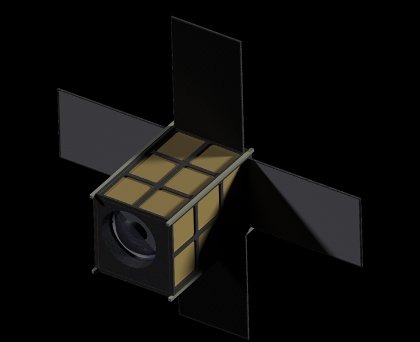
Orbital manufactures composite bus structures with integrated thermal, radiation, and impact shielding — the structural backbone of small satellites. We produce ceramic matrix composite nozzles for solid and liquid propulsion. And we manufacture the composite structures required for hypersonic flight and atmospheric reentry, where metal cannot survive.
The next wave of space infrastructure demands more. In-space compute — data centers supporting AI inference, sensor fusion, and low-latency communications in orbit — requires composite enclosures built for vacuum, radiation, and thermal loads no terrestrial data center encounters. Lunar exploration demands lander structures, habitat shells, and rover chassis engineered for one-sixth gravity and 300°C temperature swings. These are composite manufacturing problems. We're building for them.
Commercial space companies, defense space programs, and NASA collaborations — served by the same autonomous cells that print drone airframes and missile interceptor components in the morning.
See Orbital's propulsion work in detail →
↳ Bus structures · CMC propulsion · In-space compute · Lunar
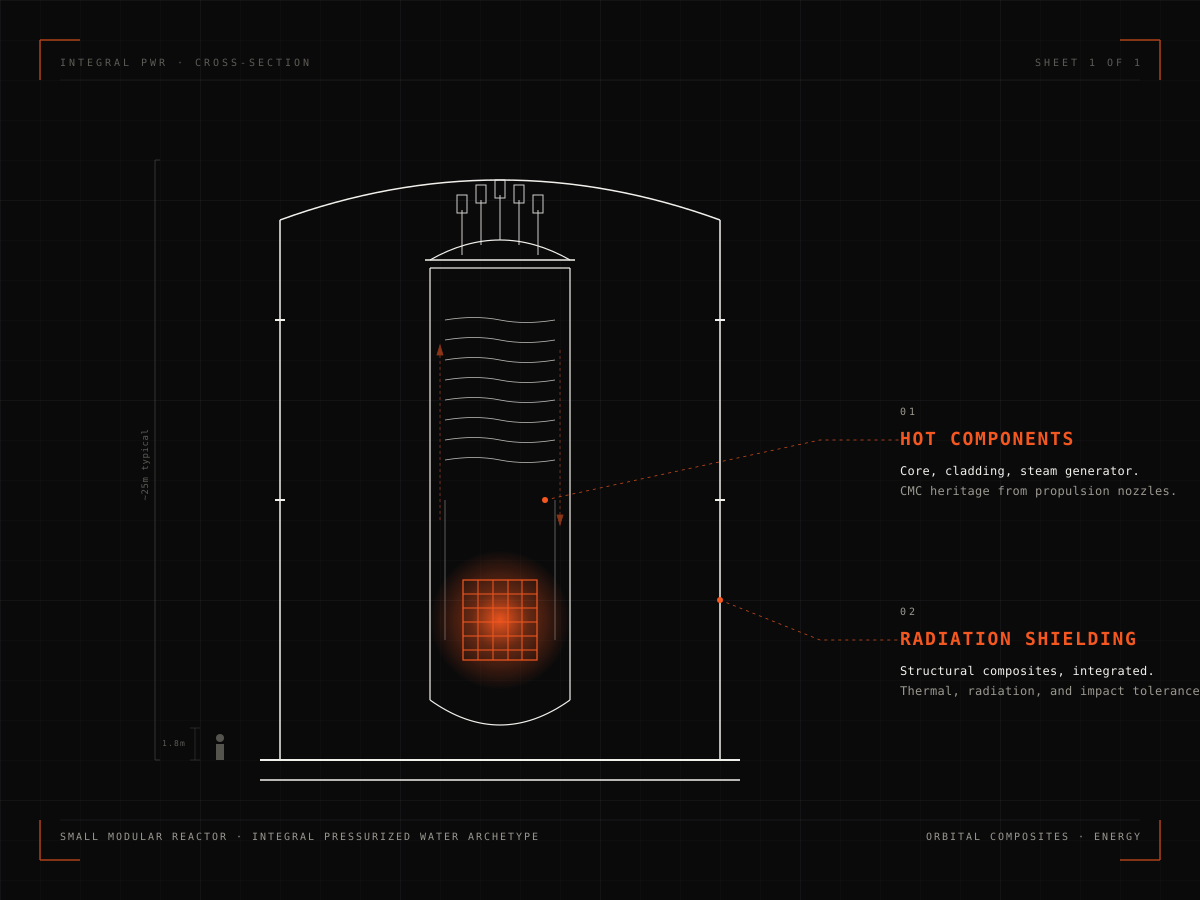
The world is re-industrializing around new sources of baseload power. Small modular reactors lead the reshoring of nuclear — deployable, scalable, safer by design. But every SMR depends on advanced composite structures to survive the environments a reactor core demands: extreme temperature, sustained radiation, accident tolerance.
Orbital produces ceramic matrix composites with heritage in propulsion nozzles, where CMC has been qualified in environments no other material class can survive. The same chemistry, the same process control, and the same robotic manufacturing stack that produces rocket nozzles now serves the components SMRs require.
We're engaging with reactor developers to bring composite structures into the advanced nuclear supply chain — because the factory that produces CMC for rockets is the factory that produces CMC for reactors.
↳ SMR components · CMC heritage · Advanced nuclear supply chainThree industries. One factory.
Anywhere the mission demands.