
Drones
The drones that prove the factory.
Reference applications for Orbital's composite manufacturing platform. Fully modular. Group 1 and Group 2 demonstrated.
Reference applications for Orbital's composite manufacturing platform. Fully modular. Group 1 and Group 2 demonstrated.
Orbital builds the manufacturing platform for advanced composites. Customers buy the factory — cells, production capacity, deployed systems. The drones exist to demonstrate what the factory produces.
We chose drones as the reference application because the factory advantage compounds on them harder than on any other composite part class. Airframes are small enough to iterate in days, structural enough to demand continuous-fiber performance, and produced at volumes where manufacturing rate determines whether the mission is viable. If the factory works on drones, it works on anything.
Every drone Orbital has flown is proof-of-capability for the factory that built it.
↳ Factory-first · Drones as reference · Every class compounds the thesis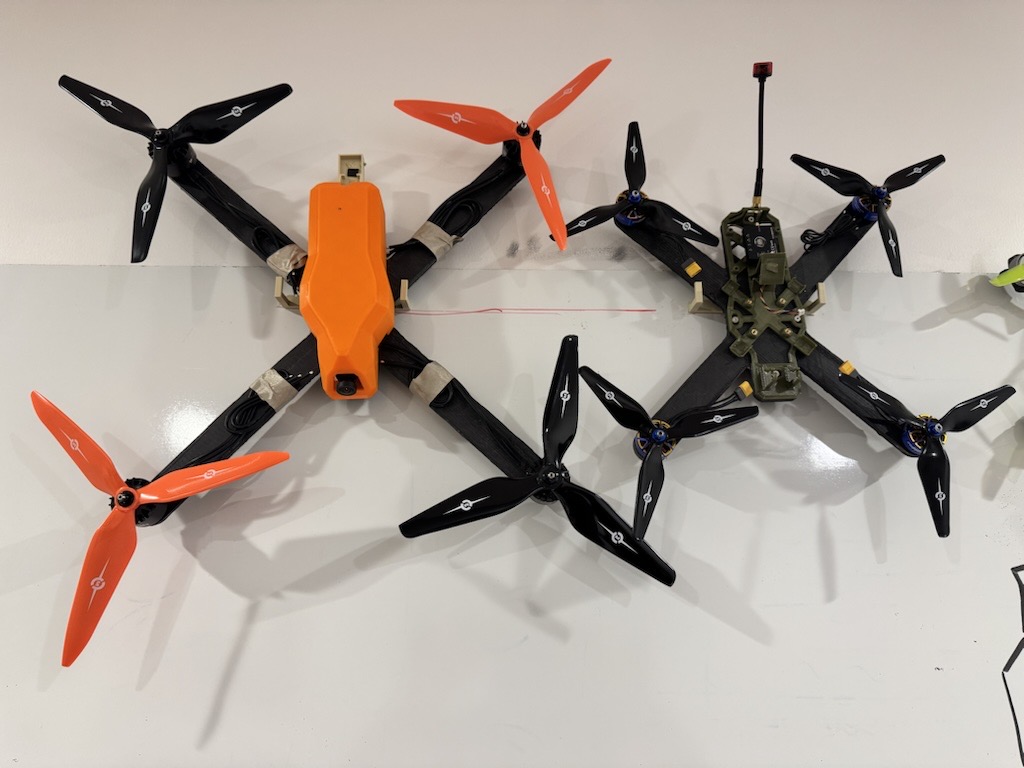
Small, fast, low-cost composite airframes for first-person-view missions. The class where unit cost and production rate are the mission parameters. Orbital's continuous-fiber printing produces airframes with the strength-to-weight performance aluminum and injection-molded polymer airframes can't reach — at rates that approach consumer-electronics manufacturing.
↳ Composite airframe · Rate-optimized · Flown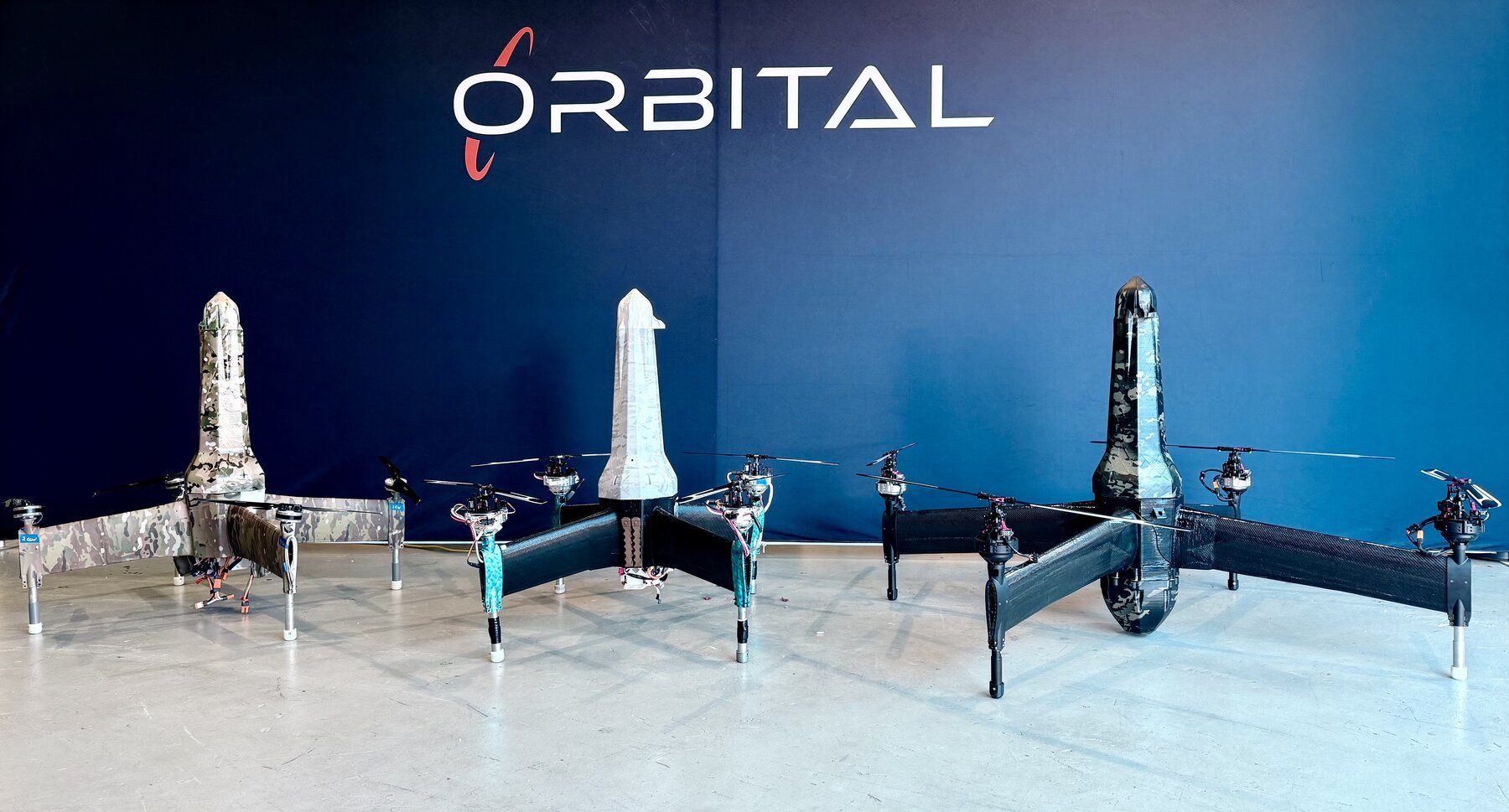
Mid-size composite platforms across the missions that define the Group 2 envelope: interceptor engagements against hostile Group 1/2 threats, payload delivery at tactical range, and communications relay. One modular airframe, reconfigured between mission kits. Composite structure means higher endurance per watt, lower acoustic signature, and survivability profiles that metal and plastic airframes don't reach.
↳ Interceptor · Payload · Relay · One airframe, many missionsSee the drones in operation in the homepage intro video →
Orbital's drones are fully modular. The same composite airframe structure reconfigures between mission kits — swap the payload, swap the sensor suite, swap the propulsion module. Mission-specific optimization happens at the kit level, not at the airframe level.
Modularity is itself a factory capability. Continuous-fiber printing lets the same structural composite geometry serve multiple mission profiles with small changes to internal features and attachment points — all programmable in the print. No retooling, no new molds, no new layup forms. Design a new mission kit, update the print file, produce the new configuration in the next build.
The drones inherit the factory's agility. A mission change doesn't require a new airframe program. It requires a software update and a production run.
↳ Modular airframe · Mission kits · No retoolingContinuous-fiber composites place fiber along load paths. Drones get the strength-to-weight performance of aerospace primary structures at the scale of a tactical platform.
Design to flight in days. Every drone is a print file. Change the geometry, print the next revision, fly the test in the same week.
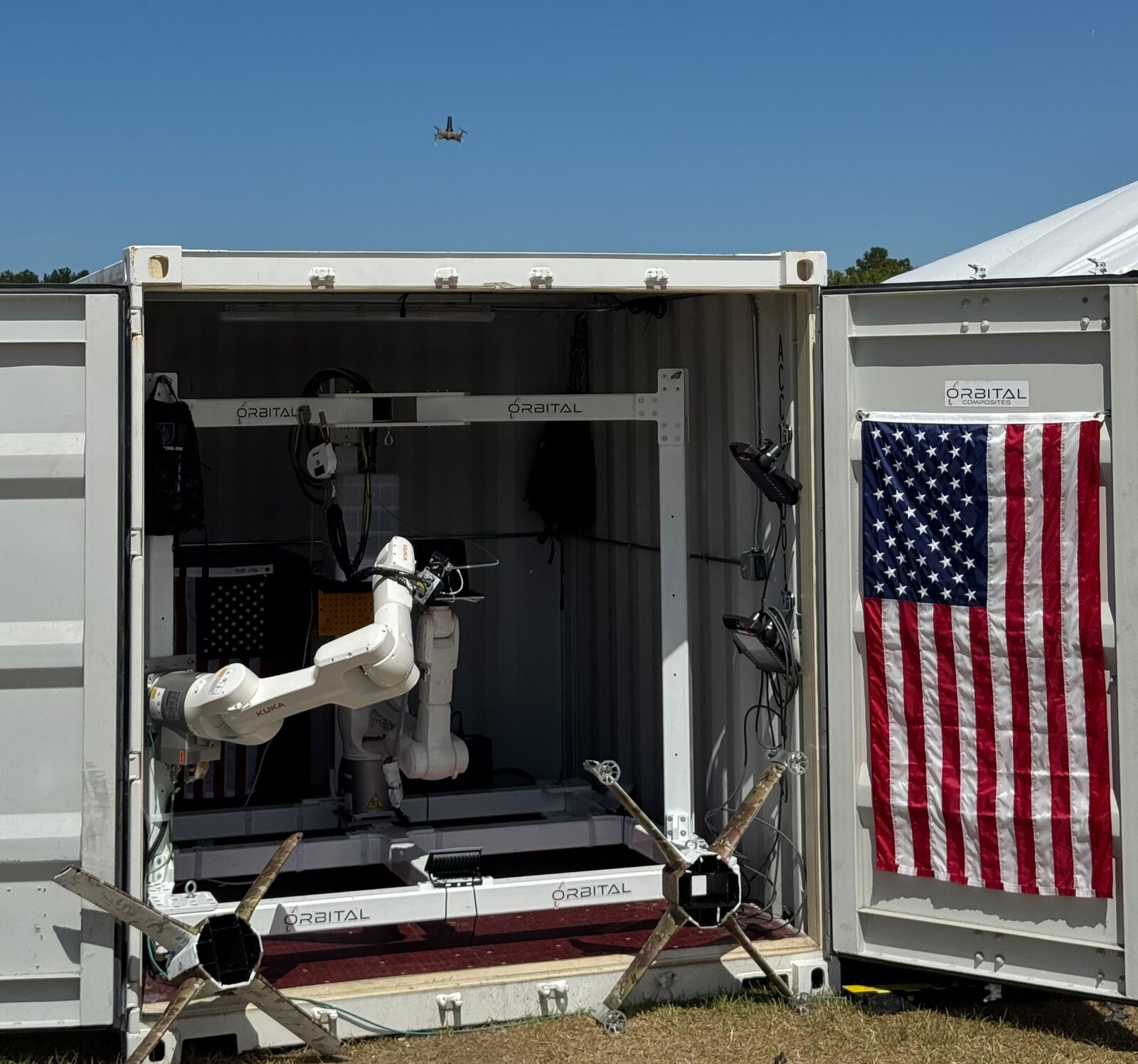
Multi-robot cells produce composite airframes at rates — and unit costs — that traditional aerospace composites manufacturing cannot approach. This is what makes Group 1 and Group 2 composite drones economically possible.
Because Orbital's cells are modular and self-contained, drone production can deploy where the mission is — existing facility, forward operating base, greenfield site. The drones can be built close to where they fly.
Electric propulsion defines the endurance envelope of today's demonstrated platforms. Longer-range and higher-payload missions require turbine propulsion — and Orbital has partnerships in place to demonstrate turbine-powered composite drones as the next step. Demonstrated by partners today, demonstrated by Orbital on the roadmap.
↳ Electric · Demonstrated · Turbine · Roadmap
The drones prove the factory.
The factory produces everything else.
If the factory is what you need — for drones or anything else composites can build — let's talk.